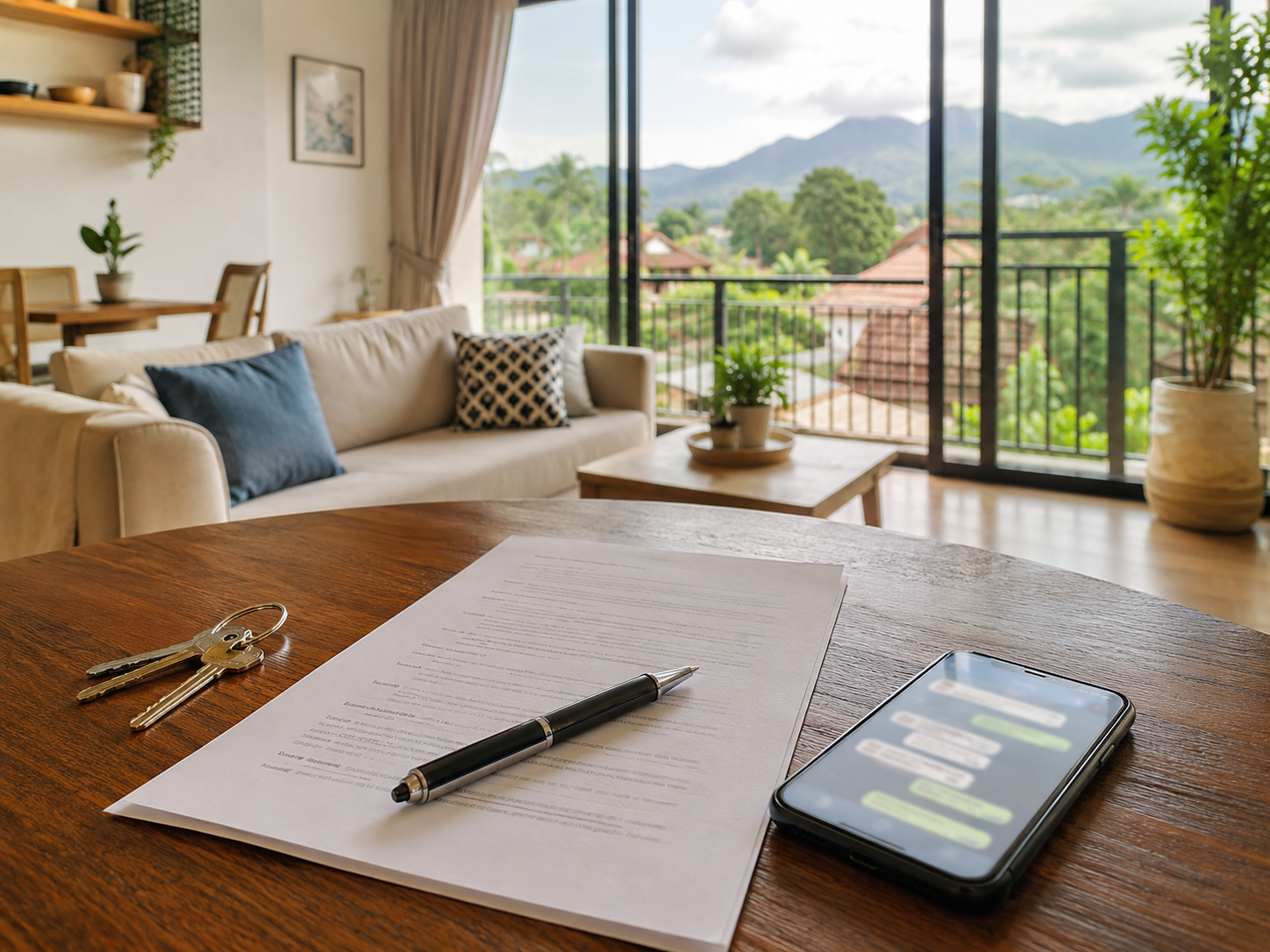
You gave notice.
You moved out.
You returned the keys.
You paid the last utility bills.
Now you expect the deposit back.
Instead, the landlord or agent tells you they still need to check the room.
Then they mention cleaning.
Then repainting.
Then damage.
Then missing items.
Or they stop replying.
This is a common pattern in rental disputes. It does not automatically mean the landlord is right.
Before giving up on the money, take a closer look at what your lease, move-out condition and evidence actually support.
Why Deposit Disputes Matter in Chiang Mai
Chiang Mai often feels less aggressive than Bangkok or Phuket.
That can make renters lower their guard.
Many rentals are arranged in a more relaxed way. Sometimes the lease is simple. Sometimes the communication is informal. Sometimes the relationship seems friendly until move-out.
Then the deposit becomes a problem.
Even when the monthly rent is not extreme, the deposit can still be a meaningful amount.
For many expats, digital nomads, teachers or long-stay residents, losing even part of that deposit is frustrating and expensive.
Start With the Lease, Not With Assumptions
The first question is not:
“What do landlords usually do?”
The first question is:
“What does my contract actually say?”
Check your rental agreement for clauses about:
- security deposit
- refund timing
- notice period
- utilities
- final bills
- cleaning
- repairs
- repainting
- furniture
- appliances
- early termination
- move-out inspection
- key return
A landlord may claim something is “standard.”
That does not make it valid.
You need to see whether the contract really supports the deduction.
Let Kleimit review the actual clauses
You can upload the lease and ask things like:
- When should my deposit be returned?
- Can the landlord deduct this cleaning charge?
- Does the contract allow repainting costs?
- Am I responsible for this damaged furniture?
- What does the lease say about final utilities?
- Which clauses matter most in this dispute?
Kleimit works from your real rental agreement, not from generic advice.
Break the Dispute Into Separate Claims
A landlord may send you a list like this:
Cleaning: ฿3,500
Wall repainting: ฿8,000
Sofa damage: ฿9,500
Microwave replacement: ฿2,800
Water bill: ฿1,400
Do not treat that as one single deduction.
Treat it as five separate claims.
For each one, ask:
- What exactly is the issue?
- Did I actually cause it?
- Was it already there?
- Did the landlord mention it earlier?
- Is there evidence?
- Is the amount reasonable?
- Does the contract allow the deduction?
This matters because some deductions may be fair while others may be inflated, weak or unsupported.
Older Chiang Mai Rentals Create Grey Areas
Chiang Mai has plenty of newer condos, but also many rentals with older furniture and aging interiors.
That creates a common problem.
At move-out, landlords may try to charge tenants for things that may actually be ordinary deterioration over time.
Typical examples include:
- worn cabinets
- faded paint
- aging mattresses
- old appliances
- loose fixtures
- minor wall marks
- swollen wood from humidity
- worn curtains
- furniture that was already aging
That does not mean every deduction is wrong.
It means you should be careful before accepting that every issue is your responsibility.
Your Move-In Evidence Can Save You
Photos and videos from the day you moved in are often some of the strongest evidence in a deposit dispute.
They can help show:
- existing scratches
- worn furniture
- stained upholstery
- chipped paint
- old appliances
- cracked tiles
- marks on walls
- mold or humidity issues
- missing items
If the landlord later says:
“This damage was caused by you.”
you may be able to compare that claim against the move-in condition.
Without that evidence, the dispute becomes much harder.
Keep Your Messages
A lot of rental disputes are not decided only by the contract.
They also turn on what was reported during the tenancy.
For example, maybe you messaged the landlord about:
- an air conditioner leaking
- mold appearing near a window
- water damage
- a broken appliance
- a loose cabinet hinge
- a stain that was already there
- maintenance that never happened
Those messages matter.
If a landlord later blames you for something you reported months earlier, your chat history can become a major piece of evidence.
Kleimit can help organize the evidence
Instead of manually switching between your lease, photos and old chat messages, you can work through the dispute in one place.
A useful way to approach it is:
Claim → contract → move-in condition → messages → supporting evidence → response
Upload your lease and evidence to Kleimit and work through your Chiang Mai deposit dispute for $7.
Cleaning Charges Are One of the Most Common Issues
Many landlords try to deduct cleaning fees after move-out.
Sometimes that is reasonable.
Sometimes it is just a vague default charge.
If the landlord says they are deducting for cleaning, ask:
- What exactly needed cleaning?
- Was the property left unusually dirty?
- Is the amount fixed in the contract?
- Is there an invoice or quotation?
- Does the condition justify the amount?
A landlord should not be able to turn every move-out into an automatic cleaning penalty without a proper basis.
Repainting Claims Need Scrutiny
Another very common deduction is repainting.
Some landlords treat repainting as a normal post-tenancy refresh.
Others try to charge the full cost to the tenant.
That is not something you should accept automatically.
Relevant questions include:
- Was there actual unusual damage?
- Were the marks minor and ordinary?
- How long did you live there?
- Was the paint already old?
- Is the landlord repainting the whole room anyway?
- Does the lease clearly allow this?
If the walls simply show minor ordinary use, the landlord may not have a strong case for a large repainting deduction.
Utility Deductions Should Be Clear
In Chiang Mai, disputes over electricity, water and internet are also common.
Before accepting any utility deduction, check:
- what the contract says
- whether the bill period matches your tenancy
- whether the rates are clear
- whether the amounts are documented
- whether the landlord is adding unexplained extras
This is especially important if the landlord sends only a total number with no supporting breakdown.
If You Already Left Chiang Mai, the Problem Gets Harder
A lot of renters do not stay in Chiang Mai forever.
They move to Bangkok.
They move to another province.
They leave Thailand.
Once that happens, chasing a deposit can become much harder.
That is why, before you leave, it helps to keep copies of:
- the signed contract
- payment proof
- move-in photos
- move-out photos
- chat history
- utility readings
- inspection notes
- key return confirmation
- landlord contact details
- agent contact details
You want the facts preserved before the argument starts.
Be Polite, But Don't Be Passive
A common mistake is either:
- being too passive
- or becoming too emotional
Neither helps much.
A better approach is to stay calm and ask clear questions.
For example:
- What is the exact amount being withheld?
- What are the individual deductions?
- What evidence supports each one?
- Which clause in the lease supports them?
- When will the balance be returned?
That often puts pressure on weak claims without turning the dispute into a fight.
Build a Simple Timeline
Before sending a serious response, write down:
Move-in date
Deposit amount
Existing defects at move-in
Important maintenance issues
Notice date
Move-out date
Inspection date
Keys returned
Landlord's deduction list
Amount still being held
Date refund was promised
Latest follow-up
This helps in two ways.
First, it clarifies the dispute for you.
Second, it makes your position easier to explain to the landlord, an agent or any third party.
Prepare One Strong Message Instead of Many Weak Ones
If you are disputing the deductions, it usually helps to send one structured message rather than a stream of frustrated follow-ups.
That message can include:
- the deposit amount
- the deductions being claimed
- what you accept
- what you dispute
- why you dispute it
- what evidence supports your position
- what amount you are requesting back
- a reasonable deadline for reply
Kleimit can help draft that response
Once your contract and evidence are in the case, you can ask Kleimit to help you prepare a clear reply to the landlord or agent.
If needed, Kleimit can also generate a PDF notice.
You stay in control of what gets sent.
DIY vs. Kleimit
Doing it yourself
Read the full lease.
Identify the relevant clauses.
Compare move-in and move-out condition.
Search old messages.
Check every deduction.
Organize the evidence.
Write the response.
Revise it.
Follow up.
Using Kleimit
Upload your lease.
Add the supporting evidence.
Let the AI review the dispute.
Ask questions about the contract.
Work through each deduction.
Prepare your response.
Generate a PDF notice if needed.
$7. One case. One-time payment.
Don't Assume the Landlord Is Automatically Right
Some deductions are fair.
Some are not.
The important question is not whether the landlord sounds confident.
It is whether the lease and evidence actually support the deductions.
Before writing off your deposit, make sure you understand your position.
Kleimit is an AI assistant for rental deposit disputes throughout Thailand. It is not a law firm and does not provide legal advice.