Or three years.
Or six.
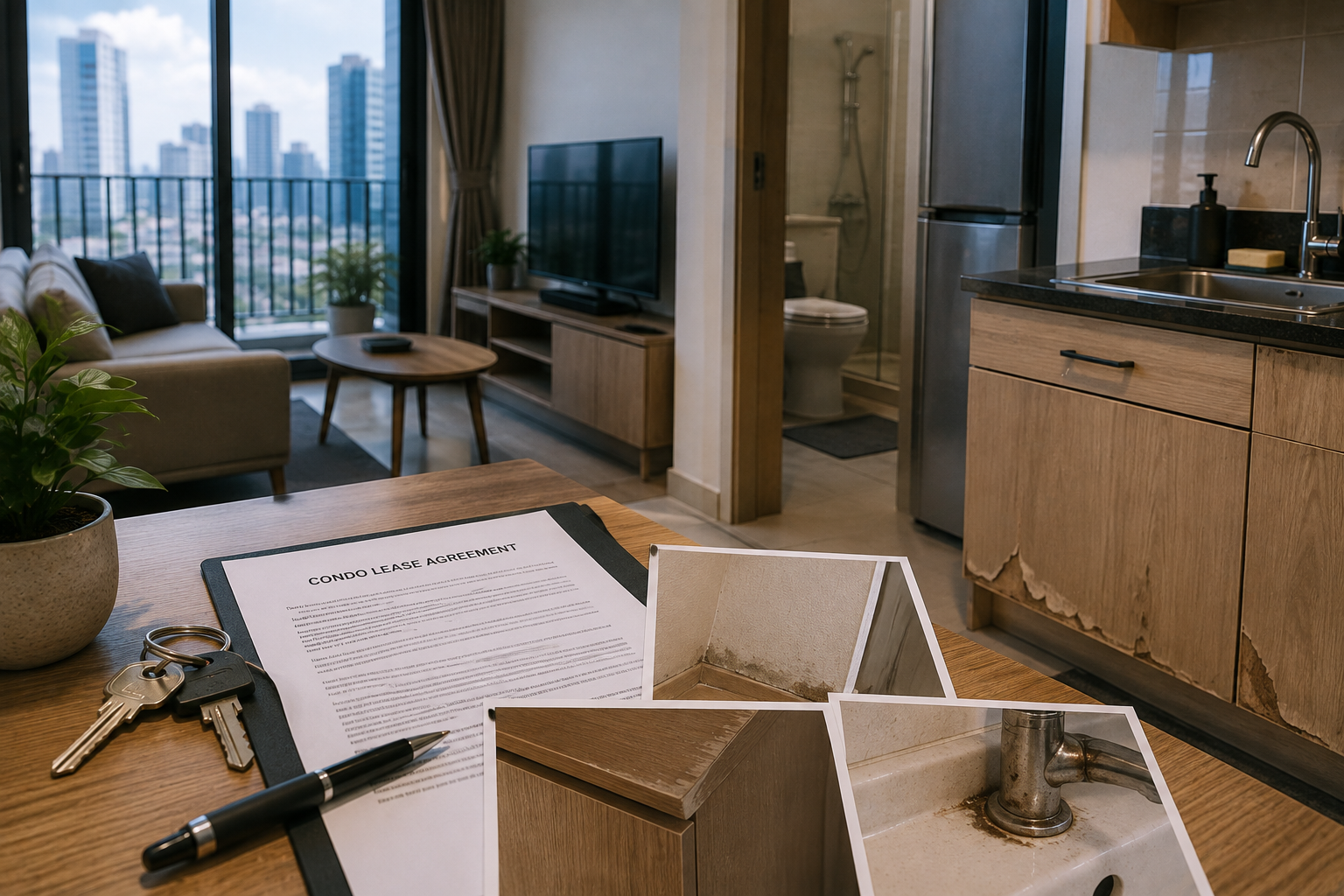
When you moved in, the furniture was already used, the bathroom fixtures were not new, the wallpaper had seen better days and the air-conditioners had probably been running through Bangkok heat for years.
Then you move out and receive the deduction list.
Rust.
Discolored wallpaper.
A loose chair.
Marks on furniture.
Worn cabinets.
Swollen flooring.
Old fixtures.
Suddenly, the landlord seems to expect the condo to look exactly as it did years earlier.
That raises one of the most important questions in a security-deposit dispute:
Is this actually tenant-caused damage, or is it normal deterioration from living in the property?
There is no useful one-line answer for every case.
What matters is what happened, how long you lived there, what condition the item was originally in, what your lease says, whether you reported problems and what your evidence shows.
A Condo Does Not Stay New Forever
Living in a property changes it.
Paint fades.
Furniture ages.
Metal fixtures develop corrosion.
Cabinet hinges loosen.
Appliances wear.
Wallpaper discolors.
Bathroom surfaces accumulate marks.
That does not automatically mean the tenant damaged those things.
A Bangkok renter recently described leaving the same condo after six years and being charged against a ฿20,000 deposit for items including rust, cleaning and aging furniture.
The important part of a dispute like that is not simply saying:
“That's wear and tear.”
You need to establish why.
Damage and Wear Are Not the Same Question
Compare these two situations.
Situation A
You accidentally smash a glass door while moving furniture.
There is a clear event, clear damage and potentially clear responsibility.
Situation B
A metal bathroom fitting has gradually corroded after several years in a humid Bangkok bathroom.
There may be no single event at all.
The difference matters.
But real disputes are rarely that obvious.
A landlord might claim that:
- flooring was damaged by water;
- furniture was not properly maintained;
- mold developed because the tenant did not ventilate;
- wallpaper was damaged rather than merely aged;
- an appliance failed because it was misused;
- rust could have been prevented;
- marks exceed reasonable everyday use.
That is why simply Googling “what counts as wear and tear?” can only take you so far.
The answer depends on the specific item, circumstances and contract.
Bangkok's Climate Can Make the Question More Complicated
Bangkok is hot and humid for much of the year.
Condos can experience issues involving:
- humidity
- mold
- condensation
- leaking windows
- air-conditioning
- plumbing leaks
- swollen flooring
- deteriorating wood
- corrosion
- peeling or bubbling surfaces
A recent Bangkok deposit dispute involved swollen floorboards that the tenant said resulted from water entering the apartment during heavy rain, something they had previously reported.
That kind of evidence can substantially change the argument.
If the floor deteriorated because you repeatedly flooded the apartment, that is one situation.
If rainwater entered through a building defect you reported months earlier, that is another.
The important question is not just what is damaged
It is:
Why is it damaged, and what do your documents show about the cause?
This is exactly where your maintenance history becomes important.
Your Old LINE Messages May Be Better Evidence Than Your Memory
Imagine your landlord sends you a photo after move-out:
“Floor damaged. Tenant responsible. ฿12,000.”
You remember that there was a leak.
The landlord says there wasn't.
Instead of arguing from memory, search your messages.
Perhaps six months earlier you wrote:
“Water is coming in near the balcony whenever it rains.”
Maybe you sent photos.
Maybe the agent replied that they would contact the owner.
That conversation may now be more important than anything either side remembers about the move-out inspection.
The same applies to:
- air-conditioner problems
- leaking sinks
- mold
- broken furniture
- loose fixtures
- plumbing
- faulty appliances
- damaged flooring
- existing stains
Maintenance messages created during the tenancy can help establish when a problem began and whether the landlord already knew about it.
This Is Where Kleimit Becomes Useful
You might have the evidence.
But now you have to connect:
the landlord's deduction → the lease → the condition of the item → your photos → old maintenance messages → your response.
That gets annoying very quickly.
With Kleimit, you can keep the rental contract and supporting evidence together and ask questions about your particular dispute.
For example:
- Does my lease make me responsible for this repair?
- What does the contract say about maintenance?
- Does this message support that I reported the leak?
- Which clause is relevant to the landlord's flooring deduction?
- Does my evidence contradict the landlord's explanation?
- What should I address when I reply?
How Long You Lived There Matters
Condition should be viewed in context.
A sofa used for three months is different from a sofa used for six years.
The same applies to:
- mattresses
- chairs
- curtains
- paint
- wallpaper
- kitchen cabinets
- appliances
- bathroom fixtures
- flooring
This does not mean that a long tenancy gives you permission to damage things.
It means that age and ordinary use matter when evaluating why something no longer looks new.
If a landlord wants you to pay the full replacement cost of an old item, useful questions may include:
- How old was it when you moved in?
- Was it already used?
- What condition was documented?
- What exactly happened to it?
- Is it being repaired or replaced?
- Does the lease address this?
- What evidence shows that you caused the deterioration?
Those questions are much more useful than arguing generally that the charge “feels unfair.”
Move-In Evidence Can Decide a Move-Out Dispute
One of the best protections against wear-and-tear disputes is evidence created before there was ever a dispute.
Look for:
- move-in photographs
- walkthrough videos
- inventory sheets
- condition reports
- rental listing photographs
- messages sent to the agent immediately after moving in
Maybe the cabinet already had swollen edges.
Maybe the sofa already had a mark.
Maybe the wallpaper was already discolored.
Maybe the balcony door never closed properly.
If you have that documented, preserve it.
A landlord's move-out photograph shows what something looks like now.
Your move-in photograph may show what it looked like before you ever touched it.
What If You Didn't Take Perfect Move-In Photos?
Many tenants don't.
You arrive in Bangkok, collect the keys, unpack your bags and start living.
You are not thinking:
“I should create a forensic evidence package in case I have a deposit dispute next year.”
That doesn't mean you have no evidence.
Look for:
- casual photographs taken inside the condo;
- videos sent to friends or family;
- pictures where the disputed item appears in the background;
- maintenance conversations;
- agent inspection photos;
- the original property listing;
- messages discussing existing defects;
- repair visits during the tenancy.
Sometimes the useful evidence was created for a completely different reason.
Be Careful With “It's Bangkok, That's Just Humidity”
The opposite mistake is assuming that everything can be blamed on the climate.
Humidity may explain some deterioration.
It does not automatically explain everything.
If the landlord claims that something resulted from neglect, the dispute may involve questions such as:
- Was ventilation reasonably available?
- Was there an existing leak?
- Was the air-conditioner functioning?
- Was the problem reported?
- Did the landlord attempt repairs?
- Did you follow maintenance obligations in the lease?
- Was the deterioration gradual or caused by a specific event?
This is another reason generic internet advice has limits.
Whether humidity helps your argument depends on the evidence around the particular damage.
Check the Maintenance Clauses Carefully
Thai condo leases sometimes place responsibilities on tenants that foreign renters may not initially expect.
For example, a lease might require periodic air-conditioner cleaning.
That does not necessarily mean the tenant is responsible for every air-conditioner failure.
A maintenance obligation and responsibility for replacing broken equipment are not automatically the same thing.
Before accepting a deduction, determine exactly what your lease requires.
Ask Kleimit about the actual clause
Instead of trying to interpret it in isolation, upload your contract and ask questions such as:
- Am I required to service the air-conditioner?
- Does this clause make me responsible for replacement?
- Who is responsible for structural repairs?
- What does the lease say about existing defects?
- Which maintenance obligations apply to this deduction?
Kleimit works from your contract, not from a generic Bangkok lease found online.
Thailand's Rental Rules May Also Matter
Thailand strengthened its rules for certain residential leasing businesses in 2025.
For covered rental businesses, the rules include protections concerning deposit deductions and ordinary deterioration.
Thailand's Office of the Consumer Protection Board has stated that where inspection finds no tenant-caused property damage, covered businesses must return the security deposit within the applicable period. OCPB also stresses that apartments and individually owned condominium units can involve different legal circumstances, so you should not assume every rule applies identically to every Bangkok condo rental.
That distinction matters.
A professional landlord operating multiple rental properties may fall into a different regulatory situation from an individual owner renting out one condo.
Your lease and the identity of the landlord therefore still matter.
Don't Argue About the Entire Deposit at Once
Suppose the landlord deducts:
Rust / bathroom fittings: ฿3,000
Wallpaper: ฿6,000
Cabinet repair: ฿5,000
Flooring: ฿12,000
Chair: ฿3,000
Cleaning: ฿2,500
Do not treat this as one ฿31,500 argument.
Break it apart.
Rust
How old is the fitting?
What caused the corrosion?
Was it reasonably maintainable?
What does the lease say?
Wallpaper
Is it torn or simply discolored?
Was the condition documented before you moved in?
How long was the tenancy?
Flooring
Was there a leak?
Did you report it?
What does your maintenance history show?
Chair
Did it break because of misuse, or did an older piece of furniture gradually loosen?
Cleaning
Was a cleaning fee already agreed or paid?
What does the lease require?
Once you approach the deductions separately, the dispute becomes much easier to understand.
Your Reply Should Explain Why Each Charge Is Disputed
Compare these two messages.
Weak
“This is normal wear and tear. I'm not paying any of it.”
Stronger
“I dispute the flooring deduction because I reported water entering near the balcony on 14 June and provided photographs at the time. Please see the attached messages and photos. I also dispute the cabinet deduction because the move-in photographs show the existing deterioration.”
The second version gives the landlord something concrete to answer.
It connects the allegation to evidence.
Kleimit can help you prepare that response
Once your lease and evidence are in your Kleimit case, you can use the AI assistant to help organize your position and draft the response you want to send.
You stay in control of the message.
Kleimit helps with the tedious part of working through the documents first.
DIY vs. Kleimit
Doing it yourself
Read the entire lease.
Find every maintenance clause.
Go through your move-in photos.
Go through your move-out photos.
Search months or years of LINE conversations.
Work out when each defect appeared.
Compare every landlord deduction.
Decide what might be wear, damage or maintenance.
Draft an item-by-item response.
Check the contract again.
Using Kleimit
Upload your rental contract.
Add the evidence relevant to the dispute.
Ask questions about the individual deductions.
Use the AI to analyze the contract and case context.
Work through the evidence in one place.
Prepare your landlord response.
Generate a PDF notice if you need something more formal.
$7. One case. One-time payment.
Your Condo Does Not Have to Look Brand New Forever
A security deposit is not automatically a renovation fund.
But neither is every damaged item automatically normal wear and tear.
The strongest position usually comes from understanding what caused the deterioration, what your lease requires and what your evidence can actually establish.
Before accepting a large deduction for an old sofa, rusty fixture, discolored wall or damaged floor, examine the claim properly.
Kleimit is an AI assistant for rental deposit disputes. It is not a law firm and does not provide legal advice.